
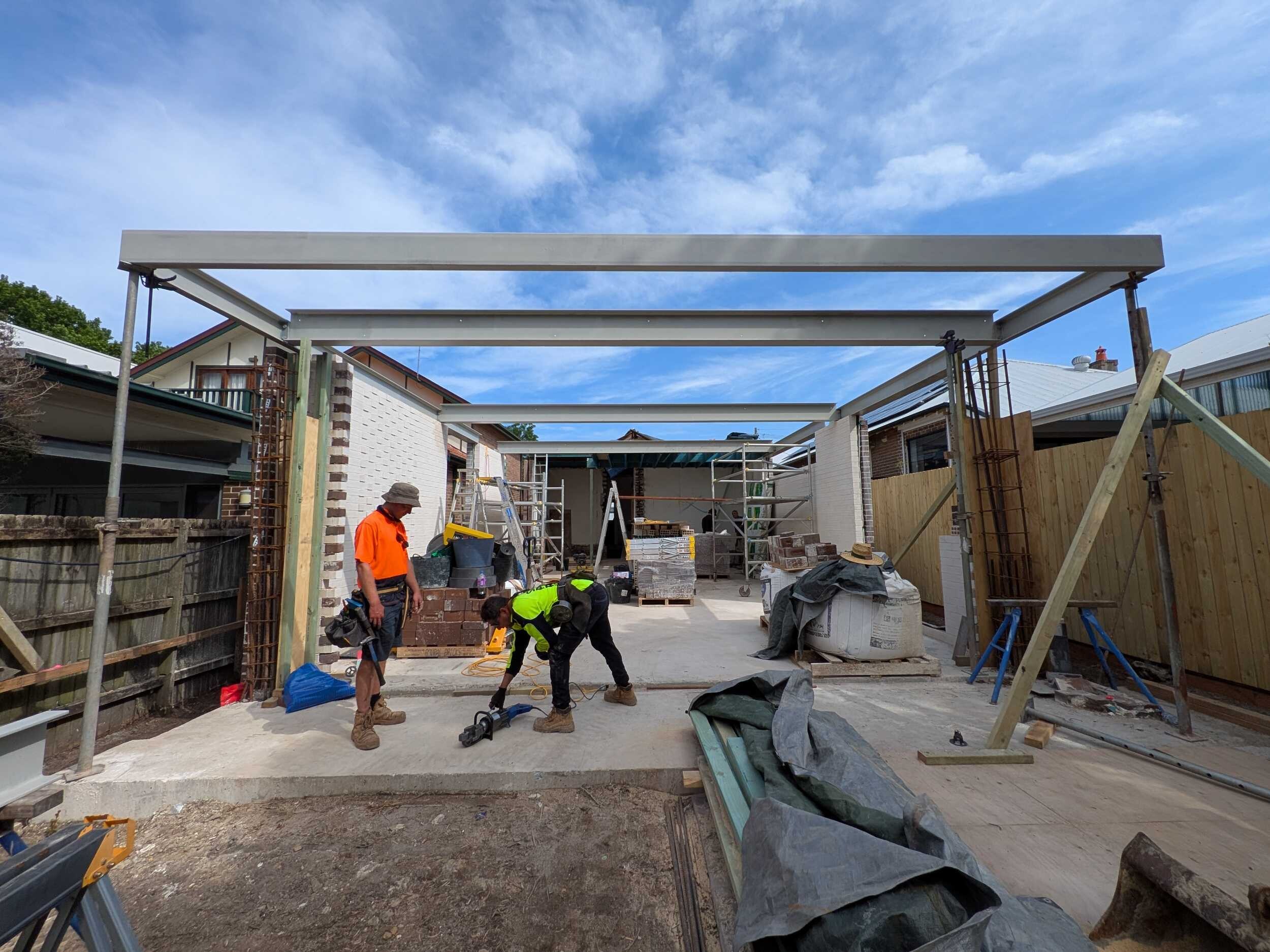
If you live on Sydney’s North Shore or Northern Beaches, you already know the trade-off: incredible salt-air sunsets, plus a climate that’s harder on buildings than most people realise.
Steel is one of the materials most affected. It’s strong, precise, and ideal for architectural renovations—but without the right protective coatings system, coastal exposure can shorten its service life far earlier than anyone expects.
That’s exactly why Australia has tightened up the minimum corrosion protection requirements for structural steel in housing under the National Construction Code (NCC 2022).
This isn’t about “gold-plating” your build. It’s about making sure expensive renovations and new homes hold up properly in real Sydney conditions.
What changed (and why it matters in coastal Sydney)
The “why”
NCC 2022 updates were driven by recurring failures—particularly in coastal regions—where steel elements (including posts and subfloor steel) were installed with coating systems that didn’t match the corrosivity of the location. NSW guidance specifically notes instances of class 1a buildings in coastal areas constructed on steel posts without adequate consideration of corrosivity, leading to inadequate corrosion protection.
Salt-laden air, higher humidity, and wind-driven coastal exposure accelerate corrosion. The closer you are to surf zones—and the more exposed the steel is—the more aggressive the environment becomes.
The “what”
Under NCC 2022 Housing Provisions, corrosion protection for structural steel has been updated and consolidated under Clause 6.3.9 (Corrosion protection), with tables that set minimum protective coating requirements by exposure/corrosivity.
Industry guidance also explains that NCC 2022 aligned corrosion protection more directly with recognised corrosivity frameworks and protective coating standards (including AS/NZS 2312 and related corrosivity zoning).
Which projects are affected?
In plain terms: most residential projects that use structural steel—including many renovations—are impacted where steel members are used and not “built into” masonry (or otherwise protected by construction detailing), especially where steel is exposed or vulnerable in subfloors and external conditions. NCC 2022 Clause 6.3.9 applies to structural steel members not built into a masonry wall and sets coating requirements accordingly.
What this means for your renovation or new build
1) Your specifications will need to be clearer
Architects and homeowners can’t rely on vague notes like “paint steel” or “galvanise as required” anymore.
NCC 2022 pushes projects toward defined coating systems that align with recognised standards (not generic site-applied paint without verified prep, thickness, and compatibility).
2) Planning and lead times need a little more structure
Higher-grade systems can change sequencing:
-
Surface prep matters (often abrasive blasting or equivalent prep for paint systems).
-
Cure times can affect installation timing.
-
Touch-ups after site cuts/welds need to be planned and documented.
The good news: when this is planned early, it’s very manageable—and it often reduces rework later.
3) Costs rise slightly, but the value protection is real
A better coating system is not just “extra cost”—it’s risk reduction.
For North Shore and Northern Beaches properties (where owners expect longevity and resale performance), corrosion control protects:
-
Structural integrity
-
The aesthetics of exposed steel details
-
The long-term cost of maintenance and remedial work
NSW guidance also makes it clear that certifiers may require evidence of materials used and measurement of overall coating thickness for painted/duplex systems—so quality assurance is part of the compliance pathway.
Understanding “higher levels of protective coatings” without the jargon
When people hear “higher level coating,” they often imagine a single product. In reality, it’s a system, and it’s about matching the steel protection to the environment.
Think of corrosion protection like sunscreen:
-
A quick, light application might be fine for a short walk.
-
It won’t last all day at the beach.
In coastal construction, the variables include:
-
Distance from breaking surf
-
Prevailing winds and exposure
-
Whether steel is sheltered or fully exposed
-
Ongoing moisture and salt deposition
What the code is trying to prevent
The big failure mode is steel corroding from the surface inward—especially where water can sit, where paint is thin, where prep was poor, or where cut edges were never properly sealed.
Typical “compliant” pathways you’ll hear about
NCC 2022 recognises different protective approaches (depending on exposure), including:
-
Hot-dip galvanizing
-
Paint systems
-
Duplex systems (galvanizing + paint), often used in harsher coastal environments
NSW guidance also references galvanizing requirements using AS/NZS 4680 coating thickness categories, and requires paint systems to be in accordance with AS/NZS 2312.1 where paint/duplex coatings are used.
How to navigate this with your builder and architect
Questions worth asking early
-
What corrosivity zone are we designing for? (Don’t guess—assess the exposure and location.)
-
Which coating system is specified, and to what standard? (e.g., systems aligned to AS/NZS 2312 guidance.)
-
How will cut edges, welds, and on-site damage be treated? NCC 2022 requires protection of damaged areas and on-site cut/weld zones to comply with the corrosion protection requirements.
-
What evidence will be provided for compliance?
NSW guidance highlights the need to document evidence (including coating thickness measurement and product details) for paint/duplex systems.
What compliance looks like in practice
For higher-grade coating systems, best practice usually includes:
-
Product data sheets and system schedules
-
Surface preparation records (especially if blasting is required)
-
Application details (primer/topcoat type, recoat windows, cure times)
-
Dry film thickness (DFT) measurements or equivalent verification
-
Touch-up procedure for site modifications
Red flags to avoid
-
“We’ll just paint it on site” without specifying prep, system, or thickness
-
No plan for cut ends, welds, and penetrations
-
No documentation trail (leaves owners exposed later—especially at certification and resale)
A positive change for coastal homes
For coastal suburbs, these NCC 2022 changes are a win.
They help ensure steel in high-value homes is protected in a way that matches real conditions—so your renovation or new build performs for decades, not just until the paint starts failing.
If you’re planning a North Shore or Northern Beaches project and you want steel detailing that looks sharp and lasts, Brands Built can help you translate the standards into a buildable, well-sequenced coating approach—without slowing the project down.