
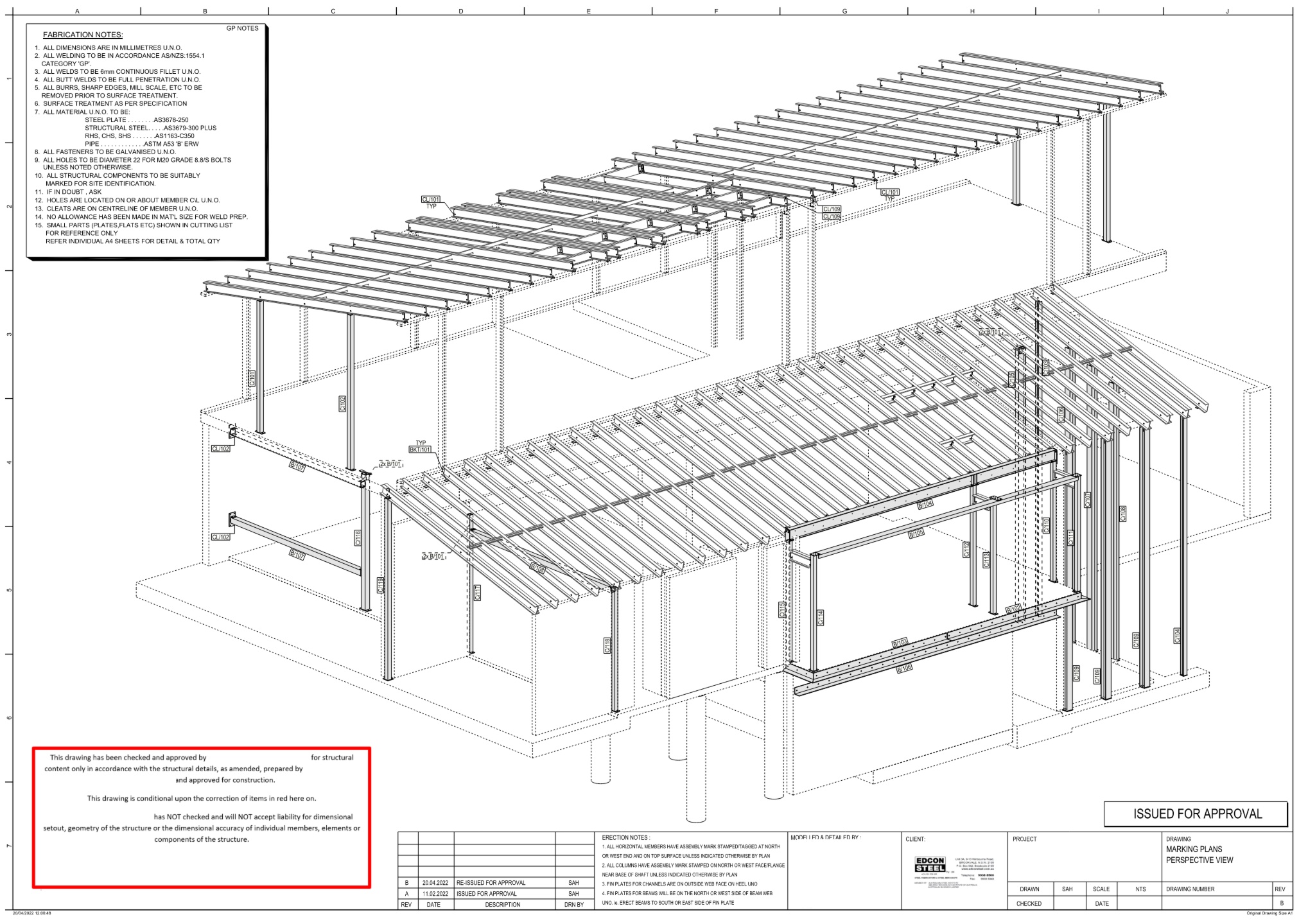
Why in-house steel drafting is a competitive advantage on North Shore and Northern Beaches renovations
Renovation steel is rarely “standard.”
On the North Shore and Northern Beaches, you’re often working inside a home that’s occupied, on a tight block with limited access, surrounded by neighbours, and sometimes constrained by heritage or strict design intent. Add coastal exposure, complex architectural detailing, and existing structure that doesn’t always match old drawings—and structural steel can become the point where time and budget start to drift.
This is where in-house structural steel drafting to optimise the structural steel drafting process becomes more than a nice-to-have. It’s a practical advantage that directly improves project outcomes for architects and renovation clients.
When drafting is managed internally—sitting alongside fabrication and close to site operations—you get three measurable benefits:
-
Time savings (faster detailing and faster decisions)
-
Error prevention (fewer RFIs, fewer variations, fewer remakes)
-
Reduced installation time on site (cleaner set-outs, smoother sequencing, less disruption)
Below is how those benefits show up in the real world of premium Sydney renovations.
The renovation reality: steel needs to be “right first time”
In new builds, steel can be engineered and detailed from a clean set of inputs. Renovations are different.
You’re tying new work into old work, often with:
-
Existing walls out of plumb
-
Floors that have sagged over decades
-
Hidden services and structure that only becomes clear after demolition
-
Tight tolerances around windows, stairs, joinery and architectural lines
-
Access constraints (narrow driveways, steep sites, limited crane reach)
Every one of those conditions increases the value of fast drafting response, tight coordination, and shop drawings that anticipate site realities.
Benefit 1: Time savings through tighter control and faster turnaround
Why in-house drafting is faster
When drafting is outsourced, information travels in loops: architect → builder → engineer → drafter → fabricator → site. Each handover adds delay. Small clarifications become emails, waiting days for replies, then reissuing drawings.
With in-house drafting, the feedback loop is much shorter:
-
Drafting sits close to fabrication, so details are resolved in a way that’s actually buildable.
-
Site questions can be answered quickly because the drafter understands the installation sequence.
-
If conditions change (they often do in renovations), drawings can be adjusted without weeks of lag.
A common North Shore/Northern Beaches example
Heritage extension with a concealed steel portal frame supporting a new open-plan rear living area.
During demolition, you discover the existing wall thickness and framing differs from the original measured drawings. If drafting is external, your programme can pause while revised details are produced and approved.
With in-house drafting:
-
You can update shop drawings immediately based on verified site dimensions.
-
Fabrication can proceed without the “dead time” that often triggers trade re-booking.
Quantifiable impact
On renovation projects, even a small drafting delay can cascade into:
-
Re-booked crane or install crew
-
Delayed carpentry and framing
-
Pushback on glazing and waterproofing
-
Longer time living in a disrupted home
In-house drafting reduces those compounding delays by keeping steel detailing responsive to real site conditions.
Benefit 2: Error prevention through collaboration and accountability
Why errors are more expensive in renovations
In renovation work, errors don’t just cause a remake—they can cause a domino effect:
-
A misaligned beam can compromise ceiling lines and joinery set-outs
-
A connection detail that clashes with existing structure can require redesign
-
A wrong hole pattern can delay critical fixings and inspections
-
A single incorrect dimension can cost a day of labour plus rescheduling
Renovations leave little room for “we’ll adjust it on site.” Adjusting steel on site often means:
-
More disruption (noise, hot works, dust)
-
More compliance steps (permits, fire safety, protection)
-
More time and risk around occupied homes and neighbours
How to Optimise Structural Steel Drafting Process in-house to prevent mistakes on site
When drafting is internal, the drafter can collaborate directly with:
-
The fabricator who knows what tolerances are realistic
-
The installer who understands access and lifting constraints
-
The builder/site team who knows sequencing and temporary works requirements
That collaboration helps catch issues before steel is cut.
Renovation-specific error traps that in-house teams catch early
-
Existing conditions mismatch
Old plans can be inaccurate. In-house drafters are more likely to request verification dimensions early and build drawings around “as-built” realities. -
Connection clashes
Renovations often require steel to thread through existing framing, services, or heritage elements. Internal coordination helps ensure connections are buildable without rework. -
Tolerance stack-ups
High-end renovations have tight architectural tolerances—flush ceilings, shadow lines, large glazing, and precise stair geometry. In-house drafting typically accounts for these interfaces better because the drafting and fabrication team share responsibility for outcomes.
A common coastal renovation scenario
Luxury addition with large openings and slim steel members to achieve clean architectural lines.
If a beam depth, flange position, or plate thickness isn’t coordinated with ceiling bulkheads and glazing head heights early, you may lose the design intent—or pay for late-stage changes.
In-house drafting helps resolve these interfaces before fabrication, reducing:
-
RFIs during construction
-
Variations triggered by coordination gaps
-
Stress on the relationship between architect, builder, and client
Benefit 3: Reduced on-site installation time (and less disruption)
Why installation time matters in premium suburbs
On the North Shore and Northern Beaches, installation is rarely “easy and open.” You often face:
-
Tight driveways and narrow side access
-
Limited laydown space
-
Neighbour constraints and noise sensitivity
-
Short crane windows and traffic management issues
-
Occupied homes where disruption must be minimised
The faster and cleaner the install, the better the project runs—and the happier everyone is.
How in-house drafting reduces install time
Good drafting doesn’t just tell you what steel to fabricate. It anticipates how steel will be installed.
In-house drafting improves installation efficiency by:
-
Producing clearer erection sequencing drawings
-
Standardising and simplifying connections where possible
-
Ensuring steel arrives labelled, packaged, and ready in install order
-
Reducing “site problem solving” time (which is expensive and slow)
A Northern Beaches example: tight-access coastal property modification
You’re replacing sections of structure and introducing new steel to support a terrace or upper-level addition. Access is restricted; you may only have a small window for lifting.
With accurate in-house shop drawings:
-
The install crew spends less time measuring, packing, and “making it work.”
-
Fixings and connection points align the first time.
-
You reduce hot works and on-site modifications—critical for safety, speed, and neighbour relations.
Quantifiable benefits on site
-
Fewer install days (and fewer days of noise/disruption)
-
Less crane time
-
Fewer follow-up visits to complete “missing pieces”
-
Faster handover to carpentry and framing trades
-
Reduced risk of delays while an occupied home waits for structural completion
In renovation projects, the steel install often unlocks the next phase. When steel goes in smoothly, the whole programme regains momentum.
Why this matters specifically for architects
Architects are designing increasingly complex renovation outcomes: larger spans, fewer columns, cleaner lines, and more natural light. That design intent depends on steel being coordinated precisely.
Specifying a fabricator with in-house drafting helps architects:
-
Protect design intent
-
Reduce coordination risk
-
Shorten the time between issue of drawings and fabrication-ready detail
-
Lower the likelihood of compromises on site
In-house drafting also supports better communication. If a detail needs refinement, you want the person drawing it to be close to the people fabricating and installing it.
Why this matters for renovation clients
For homeowners and property owners, the value is simple:
-
Less time in disruption
-
Lower risk of surprise costs
-
Fewer delays from coordination errors
-
More predictable sequencing and progress
-
A higher chance the finish matches the original vision
In premium suburbs, your renovation is a major investment. In-house drafting is one of those behind-the-scenes decisions that protects the outcome.
What to ask when selecting a steel fabricator
Whether you’re an architect specifying steel, or a client selecting a team, ask:
-
Is drafting done in-house or outsourced?
-
Who coordinates shop drawings with fabrication and installation?
-
How do you verify existing conditions on renovation sites?
-
Can you provide erection sequencing and connection details early?
-
How do you minimise on-site modifications and rework?
The quality of the answers will tell you how smoothly your steel scope is likely to run.
The takeaway: in-house drafting keeps renovations moving
In-house steel drafting isn’t just a workflow preference—it’s a project performance tool.
On North Shore and Northern Beaches renovations, it delivers measurable value through:
-
Faster drafting and faster decisions
-
Fewer errors and fewer variations
-
Quicker installs with less disruption
If you’re an architect, specify fabricators with in-house drafting as a baseline for renovation work. If you’re a renovation client, ask for it—because it directly affects your timeline, your cost control, and how smoothly your home moves from “open structure” to “finished space.”
If you’d like to discuss a renovation project, send through your concept drawings or engineering set and we can advise on the drafting approach, lead times, and how to keep steel coordination tight from day one.
Contact us today at Brands Built
Follow us on instagram for more updates
Spotting Errors Early: The Value of In-House Steel Drafting
Drafting Structural Steel Internally: Minimising Errors and Installation Delays
Optimise Structural Steel Drafting Process